by
Whitney Benefiel
| May 05, 2026
The Question Isn’t “Is This a Scam?” It’s “What Do I Do Next?”
Most of us have heard about fraud. We know not to click suspicious links, to be skeptical of urgent phone calls, and to think twice before sending money to someone we don’t know.
But here’s something we don’t talk about as often: what we’ll actually do if fraud shows up in our real lives. Because when fraud happens, it rarely feels like a clear, textbook scam. It often feels confusing. Emotional. Urgent. And very personal. That’s why one of the best tools against fraud isn’t just awareness—it’s conversation.
A Different Way to Think About Fraud
Instead of focusing only on how to spot scams, it helps to ask a different question: “If something like this happens to me, what’s my plan?”
Fraudsters are good at creating pressure. They make situations feel urgent and overwhelming. They want quick decisions made in isolation. Having a plan—before anything happens—can take away much of that power. And that plan doesn’t need to be complicated. It starts with talking things through with the people you trust most.
Talk About the “What Ifs”
Fraud doesn’t affect just one type of person. It happens to people of all ages, backgrounds, and levels of experience. That’s what makes conversations with our family and others in our circle so important.
Talking about fraud ahead of time helps everyone know what to do if something doesn’t feel right. It could be as simple as asking one another: “What would you do if someone called saying there was a problem with your bank account?” “What if someone asked you to send money right away and told you not to tell anyone?” Those conversations create clarity before confusion sets in.
Don’t Forget to Include Your Kids in the Conversation
Kids and teens are targeted by fraud more often than many parents realize, especially online through social media, gaming, and messaging apps. Sometimes it takes the form of blackmail or extortion, where a scammer pressures them to send money or keep a situation secret. One of the most important things families can agree on ahead of time is this: no one is ever in trouble for asking for help. If something online feels scary, confusing, or wrong, the right step is to stop, talk to a trusted adult, and get support right away.
One Important Rule: No Secrets When Money Is Involved
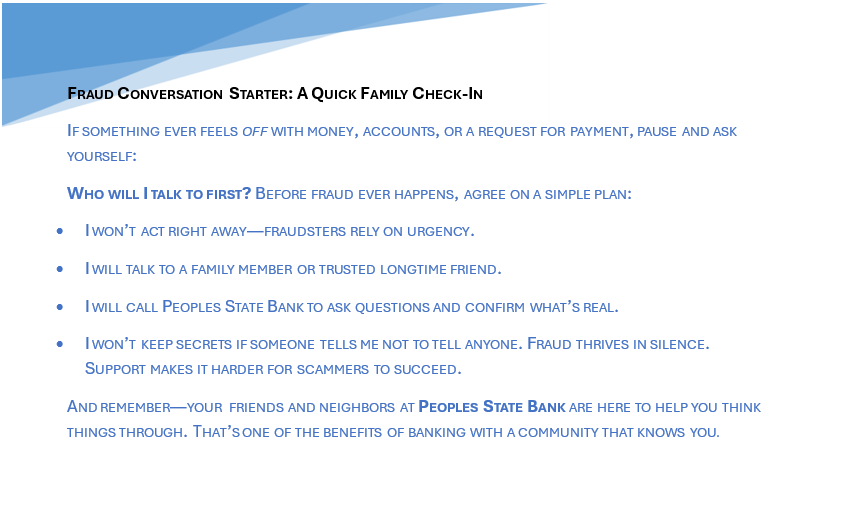
One of the biggest warning signs in almost every fraud case is secrecy. Fraudsters often insist that the situation stay private. They may say it’s embarrassing. Or that it’s confidential. Or that telling someone will make things worse. That’s a BIG red flag.
A good rule of thumb is this: If someone tells you not to tell anyone, that’s exactly when you should tell someone. Talking to a family member, a longtime friend, or a trusted professional can quickly reveal whether a situation is real—or something to walk away from.
Your Bank Is Meant to Be Part of the Conversation
Many people hesitate to call their bank because they don’t want to bother anyone or feel embarrassed for asking questions. But banks expect these calls. In fact, we encourage them.
Here at Peoples State Bank, the people you talk to aren’t strangers in a call center. They’re your friends and neighbors—the same people you see at the grocery store, school events, and local businesses. Helping customers work through difficult financial situations, including suspected fraud, is part of what community banking is all about. If something doesn’t feel right, making that call can make all the difference. Asking for advice is not a sign of weakness. It’s a sign that you’re protecting yourself—and your family.
Why These Conversations Matter
Fraud doesn’t just impact bank accounts. It can affect confidence, independence, and peace of mind. When people feel supported and know they won’t be judged for speaking up, they’re more likely to ask for help sooner.
That’s why planning together matters. When families talk openly about fraud, they remove shame from the process, make it easier to ask questions, and reduce the chance that someone feels they have to handle a stressful situation alone.
A Simple Place to Start
You don’t need to schedule a formal meeting or memorize every scam out there. One conversation can be enough to get started. Try something like this: “If something ever felt off with money or your accounts, who would you call first?” That single question opens the door to planning, support, and shared understanding.
You’re Not Alone
Fraud thrives on isolation. Community thrives on connection. Whether it’s a family member, a trusted advisor, or your local bank, help is available. At Peoples State Bank, your neighbors are always here to help you slow things down, ask the right questions, and work through situations together.
Sometimes the best protection starts with a simple conversation.